

ABOUT THE AUTHOR
Max Rose
Max Rose is the owner of Four Seasons Plumbing, a plumbing company in Asheville, North Carolina.
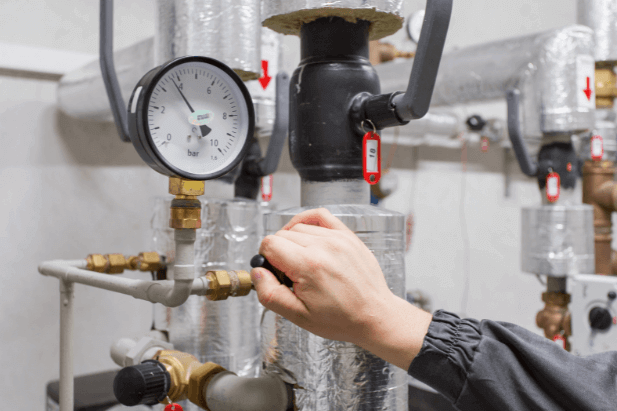
Home water pressure testing checks your PSI to confirm it’s in a safe range (usually 40–80 PSI). It helps prevent fixture damage, leaks, and costly plumbing repairs—and shows when it’s time for a plumbing inspection.
Take a moment to think about all the different ways you rely on water at your home…
Clean drinking water literally keeps you healthy and safe. Water is necessary for washing clothes, dishes, and more. That includes yourself, as we need water for bathing, showering, rinsing after brushing our teeth, and more. It’s also necessary for cooking.
Don’t forget that water also helps remove waste, whether it’s by flushing the toilet or rinsing food particles down the drain into a garbage disposal.
That’s just inside the house. Outside we use water for watering our lawns and gardens, washing cars and windows, filling pools, sprinklers for children to play in during the summer, and more.
All of those are just the most common uses we have for water in our homes. There might be many more depending on an individual family’s activities and needs.
Obviously, a properly functioning plumbing system is a critical requirement in any home, and a key component of that is water pressure. If there are problems with your system and it does not have the water pressure levels all the components need, some or all of those functions we need our water for can become difficult or impossible to perform.
Knowing how to test water pressure at home allows you to periodically check water pressure, and this can alert you to a problem that you can address before a major problem occurs. When it comes to plumbing, big problems can be expensive and messy, so it’s nice to know how to test water pressure at home.
Water pressure is the force (PSI) that moves water through your pipes to your faucets, showers, and appliances.
When it stays in the right range, your fixtures work properly and your plumbing system stays under less stress.
First, it’s essential to understand the importance of water pressure, signs that water pressure is too high or too low, and what problems can result from it.
Water pressure is about getting the right amount of volume and force of water to the fixtures. In other words, water pressure is an indicator that water fixtures are working properly.
In plain terms: too low means “not enough water getting through,” and too high means “too much force hitting your pipes and fixtures.”
Low water pressure usually feels like weak flow, especially in showers and sinks. It can also show up when appliances take longer to run or don’t clean as well.
Low water pressure is something that’s pretty easy to notice. Weak flow when you’re in the shower is one obvious example. Other places where weak water flow is easily evident include sinks, spigots, and hoses.
Signs to look out for that indicate low water pressure in your home include: water fixtures producing less water, your appliances (like a washing machine or dishwasher) taking longer to do their job or don’t work effectively anymore, and low PSI on a water pressure gauge.
A common “voice search” question people ask is: “Why is my water pressure suddenly low?” Often it’s something like buildup in a line, a hidden leak, or a supply issue, so it’s worth checking the PSI first.
If you suspect problems with your water pressure, Four Seasons Plumbing wants to help you pinpoint the issue and offer the best solution to your situation. If your PSI is consistently high or low, scheduling a plumbing inspection can help you confirm what’s causing it and avoid bigger repairs later.
low, scheduling a plumbing inspection can help you confirm what’s causing it and avoid bigger repairs later.
Low PSI isn’t just annoying, it can be a warning sign. Sometimes it points to clogs, corrosion, or leaks that need a plumbing inspection before they get worse.
When low water pressure exists, the instant problems that result include making it a lot harder to clean dishes and clothing, taking longer to fill items, and turning taking a shower, especially when it comes to rinsing off shampoo or soap, into something of a challenge. However, low water pressure can also be an indicator of a more serious problem somewhere in the system. Such problems can include clogs and leaking pipes that interfere with adequate water flow.
Clogs and leaking pipes can be sources of other troubles, such as further damage to pipes, noxious (and possibly harmful) gasses making their way back into a home, and water damage that can include rot, warping, mold, and mildew.
Expert tip: If pressure is low at just one fixture, it’s often a localized issue (like a clogged aerator). If it’s low everywhere, it’s more likely a main supply, pressure regulator, leak, or system-wide restriction.
High water pressure can be harder to “feel,” but it can quietly wear out plumbing parts fast. If your PSI is consistently high, it can shorten the life of fixtures, valves, and appliance hoses.
The signs of excessively high water pressure aren’t always so obvious, though some are, such as unusually high pressure and flow when you open a spigot or turn on a faucet. Still, water pressure that’s too high can cause serious trouble. For instance, it can be really hard on plumbing lines and fixtures, possibly damaging them. Sometimes, it can even cause blowouts in washing machine hoses and in flex lines, which in turn can lead to flooding in the home, one of the potentially most damaging and expensive plumbing emergencies that can occur.
Other clues of high pressure can include dripping faucets, running toilets, or “banging” pipes (water hammer), especially if those problems keep coming back after repairs.
A pressure regulator (also called a pressure-reducing valve) helps keep your home’s water pressure at a safe, steady level. Even if you have one, it can wear out over time, so checking PSI twice a year is smart.
Suppose your home has a pressure regulator or a pressure-reducing valve on the main water supply line. In that case, you should still be checking your water pressure, though, because the regulator or valve, like any other part, can eventually fail.
It’s therefore important to check your water pressure at least a couple of times a year, not just because of problems you can see but also because of those you can’t see.
Quick reality check: A failing pressure regulator can cause “creeping pressure,” where PSI slowly rises when no water is running. That’s one reason pros often recommend checking pressure when the house is quiet (no fixtures in use).
You can test your home’s PSI in about 5 minutes using a simple gauge. The goal is to get an accurate reading at a good test point (usually an outdoor hose spigot or washing machine cold supply).
If you’re wondering how to check water pressure at home, here’s some good news: it’s easy and inexpensive. The most convenient scenario is already having a dedicated water pressure gauge hooked up somewhere in the home’s water line. This makes it quick and easy to check water pressure anytime you want.
For homes that don’t have a dedicated water pressure gauge, the process is still pretty simple. You’ll need a water pressure gauge (inexpensive and easily obtainable at a local home and garden center or hardware store), a pair of pliers, and a rag for wiping up any spills.
Water pressure measurement tool tip: Look for a gauge that reads in PSI and connects with standard female hose threads so it fits a hose bib or laundry supply.
Does your water come from a city or municipal water supply facility? If it does, the best spot for testing your water pressure is the outdoor hose spigot that’s closest to where the main water supply line enters your home. For those whose water comes from a well, the best location is a faucet or other fixture close to the well’s pressure tank.
Using a fixture that’s fed by a supply pipe that’s the largest size inside the house will give the most accurate reading; bathroom plumbing fixtures often have smaller lines. These largest lines are typically ¾ inch to 1 inch, but they can be as small as half an inch.
When you check the water pressure and there’s water running elsewhere in the home, you can get a false low reading as a result. So before you install the gauge and check the pressure, make sure no other sinks, spigots, or faucets are running.
Also, make certain that dishwashers, washing machines, and refrigerators that have water lines aren’t operating. You don’t have to shut off the water flow; just ensure none of those things are in operation.
Here are the steps to avoid a false reading:
If there’s a hose or anything else attached to the spigot or faucet you’re testing, remove it. Next, screw the pressure gauge on. The gauge should give readings in psi (pounds per square inch) and should have female hose threads so that you can attach them to the fixture.
A tight seal is important for an accurate reading, and the rubber gasket inside the pressure gauge should enable an adequate seal just by hand-tightening. Still, if there is any water leaking, that’s when you’ll need those pliers (or an adjustable wrench) to make sure you get a good seal.
Now all you have to do is turn the water on all the way and then get a reading from the dial on the pressure gauge.
What if you don’t have a hose bib for checking the water pressure? It’s still easy to check it on your own. Just use the faucet that supplies cold water to your washing machine. First, you’ll have to remove the hose attached to it. That hose will also have water inside it, so be careful to avoid or minimize spills. Once the hose is off, screw the water pressure gauge on and turn the spigot on to full pressure.
Pro-level best practice (optional but helpful): Take one reading with “no water running” and one reading while a faucet is running. That gives you a simple snapshot of both static pressure and working pressure.
Most homes operate within a 40–80 PSI range, but many plumbers recommend keeping pressure closer to 50–60 PSI to reduce wear on pipes and fixtures.
If your reading is consistently above 80 PSI or below 40 PSI, that’s a sign something may need attention.
Now that you’ve used your water pressure gauge to get a reading, what are those results telling you?
Simple PSI guide (quick reference):
Typically, the water pressure in a home ranges from 40 to 80 psi, and in general, it shouldn’t exceed 60 psi. So, if your reading comes back under 40, your water pressure is lower than it should be, and if it’s over 80, it’s higher than it should be.
If you have a pressure regulator and it’s giving a reading over 80 psi, that’s a sign that the regulator needs to be repaired or replaced; most standard pressure regulators have a maximum adjustment of up to 90 psi. In case you don’t have a pressure regulator, you should consider having one installed if the pressure gauge is reading over 60 psi.
You should take a second reading to make sure you did everything right and to see if you get consistent results. When it seems pretty clear that your water pressure is too high or too low, it’s time to call your water supplier or the utility company to see if someone can come out to make an adjustment, or you can call a plumber for a thorough inspection to determine if repairs are necessary. This is never a situation to ignore, and you should act with special haste the farther above or below normal the water pressure is.
If your PSI is high and you already have a pressure regulator, that’s often the “next step” moment for a plumbing inspection, because the regulator may be failing or misadjusted.
Knowing how to test water pressure at home is a critical skill and a task that isn’t hard to perform. Checking your water pressure at least twice a year can help you discover problems in your system and take steps to resolve them before you’re faced with major repairs that carry a lot of costs and inconvenience.
At Four Seasons Plumbing, we hope you’ve found this guide to testing your home water pressure comprehensive and helpful, and if you have any questions, please let us know!
Save Cost for Plumbing with Four Seasons Plumbing by catching water pressure problems early. Testing your home’s water pressure twice a year helps prevent leaks, appliance damage, and costly plumbing emergencies. If your water pressure measurement is too high or too low, schedule a professional plumbing inspection to identify the cause and check your pressure regulator before damage occurs.
Attach a water pressure gauge to an outdoor hose spigot (or the washing machine cold supply), make sure no water is running inside, turn the water on fully, and read the PSI from the dial. That single reading gives you a clear baseline for whether your pressure is too low, normal, or too high.
For most homes, a comfortable target is around 50–60 PSI. While many systems operate within 40–80 PSI, pressure that stays above 80 PSI can increase wear on plumbing pipes, fixtures, and household appliances.
Yes, high water pressure can be common in some Asheville neighborhoods, especially in areas served by municipal water systems with elevation changes. Homes at lower elevations may experience higher incoming pressure, making regular testing and a properly working pressure regulator important.
You should contact a plumber if your water pressure consistently measures below 40 PSI or above 80 PSI, or if you notice sudden pressure changes. These issues can indicate leaks, a failing pressure regulator, or other problems that require a professional plumbing inspection.
Yes, prolonged high water pressure can shorten the lifespan of pipes, valves, water heaters, washing machines, and dishwashers. Over time, excess pressure increases the risk of leaks, burst hoses, and costly water damage.
ABOUT THE AUTHOR
Max Rose is the owner of Four Seasons Plumbing, a plumbing company in Asheville, North Carolina.
Join Asheville's top-rated plumbing team. We offer stable work, competitive benefits, and a supportive, fun environment.
Explore Open Careers