
ABOUT THE AUTHOR
Max Rose
Max Rose is the owner of Four Seasons Plumbing, a plumbing company in Asheville, North Carolina.
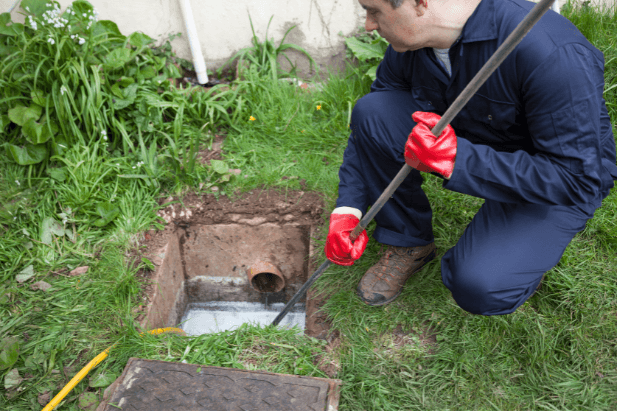
The difference between a drain line and a main sewer line is simple. A drain line carries wastewater from one fixture inside your home, while the main sewer line carries all wastewater away from the home through an underground pipe connected to the sewer system or septic system.
To understand the difference between drain line clogs and main sewer line clogs, it’s important to understand your house’s plumbing system. Your internal plumbing system connects all the sinks, toilets, showers, and other fixtures within your home. This network of pipes is responsible for draining wastewater from each individual fixture and delivering it to the main sewer line or septic system.
Sewer Lines (also commonly called Main Lines) are outside and underground your home, whereas drain lines are inside your home.
Drain line clogs and main sewer line clogs are two common plumbing issues that homeowners may encounter. Drain line clogs typically affect individual fixtures, causing slow drainage or backups in a specific area. Main sewer line clogs, on the other hand, impact the primary pipe responsible for wastewater removal from the property. These clogs can lead to multiple fixture backups, sewage overflow, and unpleasant odors.
Because every drain line feeds into the main sewer line or sewer lateral, a blockage in either location can disrupt the entire plumbing system.
Homeowners sometimes misidentify the source of a plumbing problem, which is why understanding whether the issue affects one drain or multiple fixtures is key to accurate diagnosis.
Here is a simple comparison to help identify the source of a clog more quickly.
|
Feature
|
Drain Line
|
Main Sewer Line
|
|---|---|---|
| Location | Inside the home | Outside and underground |
| Serves | One fixture | Entire home |
| Common symptoms | Slow drain in one area | Multiple fixture backups |
| Risk level | Localized issue | Potential sewage overflow |
| Typical solution | Professional drain cleaning | Sewer line cleaning or repair |
Even though this section refers to a septic line, the warning signs are the same for a main sewer line clog.
A main sewer line clog occurs when the blockage affects the primary pipe responsible for carrying wastewater away from your property. Here are some common signs indicating a main septic line clog:
a) Multiple fixture backups: If you notice simultaneous backups or slow drainage in various fixtures, such as toilets, sinks, and showers, it could indicate a clog in the main sewer line.
b) Sewage backup or overflow: Sewage backup or overflow is one of the most obvious signs of a main sewer line clog. If wastewater starts to come up through drains or toilets, it requires immediate attention from professionals like Four Seasons Plumbing.
c) Unpleasant odors: A foul smell emanating from drains or the yard can indicate a clogged main sewer line. Sewage buildup can produce strong, unpleasant odors that should not be ignored.
If more than one drain is backing up at the same time, especially on the lowest level of the home, the issue is usually in the main sewer line or sewer lateral rather than a single drain line.
For more severe plumbing problems, such as main sewer line clogs, Four Seasons Plumbing provides comprehensive sewer line cleaning and repair services. They understand that a clogged main sewer line can lead to sewage backups, foul odors, and potential damage to your property.
Their skilled technicians can accurately identify the location and cause of the clog using advanced inspection methods, such as video camera inspections. They then employ powerful hydro-jetting technology to clear the blockage and restore the proper flow of wastewater.
Regular sewer line maintenance can help prevent these issues by identifying buildup or damage before it leads to a full blockage.
Professional inspections are important because sewer and drain issues are often hidden underground and cannot be accurately diagnosed without proper tools and experience.
The staff at Four Seasons Plumbing consists of experienced and skilled professionals who are dedicated to providing exceptional service and resolving plumbing issues effectively.
A drain line clog usually affects one fixture at a time, making it easier to identify than a main sewer line issue.
On the other hand, a drain line clog occurs within the internal plumbing system of your home. It typically affects a specific fixture or a localized area.
Here are some signs of a drain line clog:
a) Slow drainage in one fixture: If only one sink, shower, or toilet is experiencing slow drainage, it suggests a localized drain line clog. This usually occurs due to an accumulation of debris, such as hair or soap scum.
b) Gurgling sounds: If you hear gurgling sounds when using a particular fixture, it may indicate a drain line clog. This occurs when air is trapped in the pipes due to a blockage.
c) Foul smells in one area: A strong, unpleasant odor originating from one specific fixture may signify a drain line clog. The accumulation of organic matter can cause foul odors to emanate from the drain.
When the issue remains isolated to one drain, it is almost always a drain line problem rather than a sewer drain issue.
Identifying a drain line clog early can help prevent buildup from spreading into the main sewer line over time
When it comes to drain line clogs, Four Seasons offers professional drain cleaning services. They understand that slow drainage or backups in individual fixtures can disrupt your daily routine and cause inconvenience.
Their expert plumbers utilize advanced techniques and tools to remove blockages from drain lines, restoring proper flow and functionality. Whether it’s a clogged sink, shower, or toilet, they have the expertise to diagnose and resolve the issue promptly.
Knowing whether a clog is in a drain line or the main sewer line helps prevent unnecessary damage and costly repairs.
When dealing with plumbing issues, it’s essential to enlist the help of professionals like Four Seasons Plumbing. Attempting to resolve clogs on your own using DIY methods may worsen the problem or cause damage to your plumbing system.
Avoid continuing to run water when drains are backing up, avoid repeated use of chemical drain cleaners, and avoid ignoring early warning signs like odors or slow drainage.
Early professional intervention helps protect pipes, reduces the risk of sewage damage, and keeps the plumbing system functioning properly.
Four Seasons Plumbing also offers sewer line repair and replacement services.
Common causes of sewer line problems include tree root intrusion, grease buildup, pipe corrosion, shifting soil, and damaged sewer laterals.
If a main sewer line clog is caused by more serious issues like tree root intrusion, pipe damage, or corrosion, their team can provide expert solutions. They have the knowledge and experience to perform sewer line repairs and replacements with minimal disruption to your property.
With their expertise and state-of-the-art equipment, Four Seasons Plumbing can accurately diagnose the source of the clog and provide effective solutions. Their experienced plumbers are equipped to handle both drain line clogs and main sewer line clogs, ensuring the proper functioning of your plumbing system.
If you’re dealing with slow drains, recurring backups, or signs of a main sewer line clog, Four Seasons Plumbing is here to help. Our experienced team can quickly identify the issue and provide reliable drain and sewer solutions for homes in Asheville, NC. Contact us today to schedule a professional inspection.
A drain line carries wastewater from one fixture, while the main sewer line carries all wastewater away from the home through an underground pipe.
If multiple fixtures back up at the same time or sewage odors are present, the clog is usually in the main sewer line or sewer lateral.
Yes. Sewer line maintenance helps prevent major clogs, reduces repair costs, and protects your plumbing system from long term damage.
Many homes in Asheville were built decades ago and may have older sewer lines made from clay or cast iron. These materials are more prone to tree root intrusion, corrosion, and shifting soil, which can increase the risk of main sewer line clogs over time.
For older homes or properties with large trees nearby, a professional sewer line inspection every one to two years can help catch issues early and reduce the risk of unexpected backups or costly repairs.
ABOUT THE AUTHOR
Max Rose is the owner of Four Seasons Plumbing, a plumbing company in Asheville, North Carolina.