
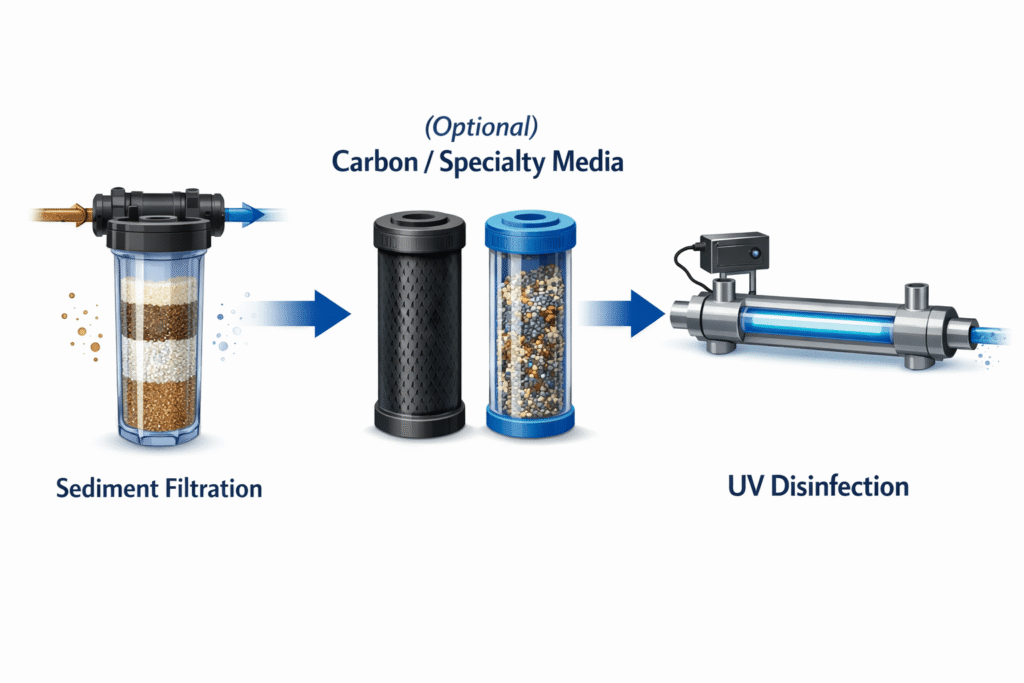
Water Purification Process Stages
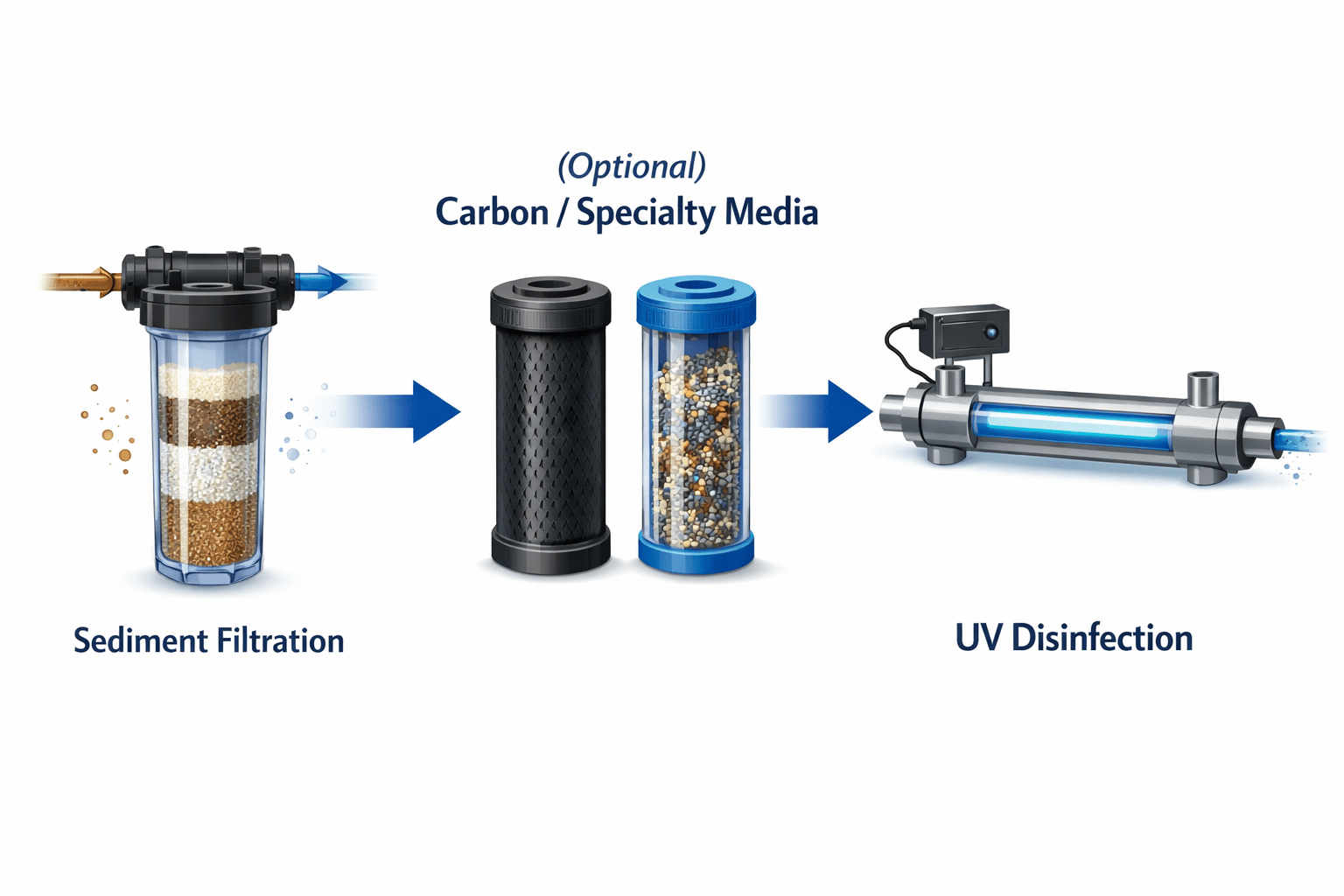
- UV is a disinfection tool, not a “clean-up” filter for cloudy water.
- After heavy rain, pre-filtration is the difference between dependable UV protection and inconsistent results.
- If your wellhead flooded or you suspect contamination, follow official guidance: inspect → disinfect if needed → test.
Why Heavy Rain Can Change Well Water in Western NC
Western NC’s terrain (slope, runoff pathways, shallow soils in some areas) can move water quickly. After heavy rain, groundwater flow patterns can shift, and runoff can increase the chance that microbes or contaminants reach a well, especially if the well cap/seal is compromised or water pools near the casing. The EPA’s flood guidance for private wells emphasizes steps like inspecting the well and pump, disinfecting when appropriate, and sampling/testing after flood events. If heavy rain caused actual flooding at the wellhead, that’s a “treat it seriously” moment, because floodwater can contain bacteria and other pollutants.What UV Water Treatment Does and Does Not Do
What UV does
UV treatment exposes water to ultraviolet light in a chamber to inactivate microorganisms by damaging their DNA/RNA so they can’t reproduce. EPA technical guidance for UV disinfection explains UV as a disinfection technology and details how performance is evaluated UV dose, validation, and how water quality affects effectiveness.What UV does not do
UV does not remove:- Sediment/silt/sand (cloudiness)
- Iron or manganese staining
- Tannins (tea-colored water)
- Sulfur odors (rotten egg smell)
- Chemicals like pesticides or VOCs
- Hardness minerals
Storm Symptom-to-Solution Table
| After Heavy Rain, You Notice… | Likely Cause | Does UV Help? | What Usually Fixes It |
|---|---|---|---|
| Cloudy/murky water | Sediment/turbidity spike | ⚠️ Not by itself | Coarse + fine sediment filtration |
| Grit in faucets | Sand/silt | ❌ | Sediment filtration; well or plumbing check |
| Musty/earthy taste | Organics/tannins | ❌ | Carbon or specialty media (test first) |
| Rotten egg smell | Hydrogen sulfide | ❌ | Sulfur treatment media (test first) |
| Looks normal, but you’re worried | Microbial risk may be invisible | ✅ Often | Filtration + correctly sized UV |
| Positive coliform test | Microbial contamination | ✅ Often | UV + investigate well integrity + retest |
When UV Works Best After Heavy Rain: The 3 Conditions
1) Clear water entering the UV chamber
The real-world limitation of UV is simple: UV light needs access to the microorganisms. If water is turbid, particles can interfere with UV disinfection by shielding microbes. EPA UV guidance materials discuss the importance of water quality characteristics and proper application for UV performance. After heavy rain, it’s common to need sediment filtration before UV.2) Correct UV sizing for your home’s peak flow
UV isn’t “more is better”; it’s “right dose at the right flow.” If your home’s peak demand exceeds the unit’s rating, water moves too fast for the intended UV dose. Good sizing considers:- number of bathrooms
- simultaneous use (shower + laundry + dishwasher)
- plumbing layout and pressure tank behavior
3) Proper maintenance (lamp + sleeve)
UV lamps degrade over time (even if they still glow). Mineral buildup on the quartz sleeve can reduce intensity. This matters even more after storms if sediment and minerals spike and foul components faster.The Storm-Ready Treatment Approach: Multi-Barrier Protection
If you take one expert concept away from this article, make it this: UV works best as the final step in a filtration “train.” It’s not a stand-alone fix for stormy water; it’s a final safety barrier when your water is clear. For homeowners, this aligns with what many standards and technical references emphasize: UV is intended for microbiological treatment under appropriate conditions, and it is not meant for visibly contaminated water without proper pretreatment. (For example, NSF/ANSI 55 describes UV systems and notes limitations for “obvious contamination.”)Recommended Whole-Home Order
Typical storm-resilient setup (whole home): Well → Spin-down / coarse sediment → Fine sediment (5–1 micron) → (optional) carbon/specialty media → UV → House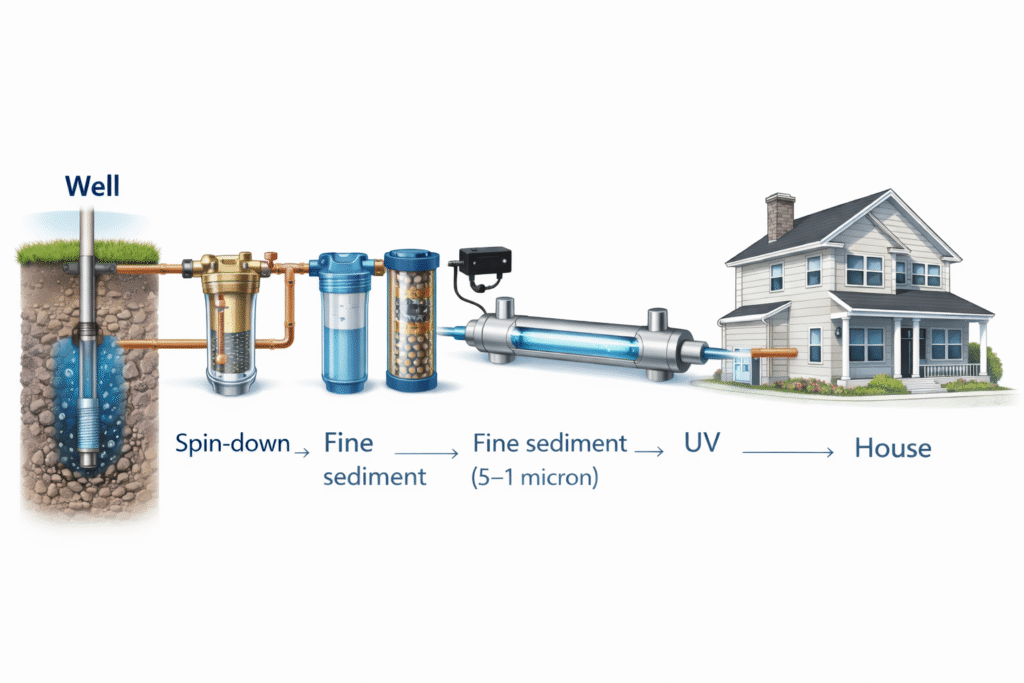 Why this order works after storms:
- Sediment filters remove particles that can reduce UV performance
- Carbon/media can address taste/odor issues (based on testing)
- UV disinfects as the final barrier when the water is clear
What to Do Right After Heavy Rain (Practical + Safe)
If your well water changes after a storm, or especially if flooding reaches your wellhead, use this safer sequence:- Avoid drinking the water if it’s cloudy or suspect.
- If your well was flooded, treat it as potentially contaminated until it’s inspected and tested. The EPA’s flood guidance outlines inspection, disinfection when appropriate, and sampling/testing steps.
- Contact your local health department or a qualified professional for guidance on disinfection and safety. The CDC warns that working on a well after an emergency can be hazardous and recommends using a well or pump contractor.
- Test your well water through a qualified lab and interpret results with help if needed. The CDC provides well testing guidance and emphasizes well owners’ responsibility for testing.
- Plan a long-term storm solution (filtration + UV) rather than reacting every time the weather gets dramatic.
| Component | Typical upkeep | Why it matters after storms |
|---|---|---|
| Spin-down / coarse filter | Rinse more often during storm season | Captures grit before it clogs finer stages |
| Fine sediment filter | Replace by schedule or pressure drop | Keeps water clear for UV performance |
| Carbon/specialty media (if used) | Replace per media specs | Controls taste/odor/chemistry issues |
| UV lamp | Replace per the manufacturer’s schedule | UV output declines over time |
| Quartz sleeve | Inspect/clean as needed | Film reduces UV intensity |
UV vs Other Options After Heavy Rain (What Each One Is Actually For)
After storms, homeowners sometimes compare UV to chlorination, filters, and other systems. Here’s the straight story:- Sediment filtration: Best for dirt and cloudiness; doesn’t disinfect
- UV disinfection: Best for microbial inactivation; requires clear water
- Carbon/specialty media: Best for taste/odor and certain chemicals; doesn’t disinfect
- Shock chlorination/disinfection: Sometimes used after emergencies, but should be handled carefully and often professionally due to safety concerns (CDC).
UV Reliability vs. Storm Cloudiness
This is a conceptual graph (not lab data) to visualize the real-world effect of turbidity on UV performance: UV reliability vs. Turbidity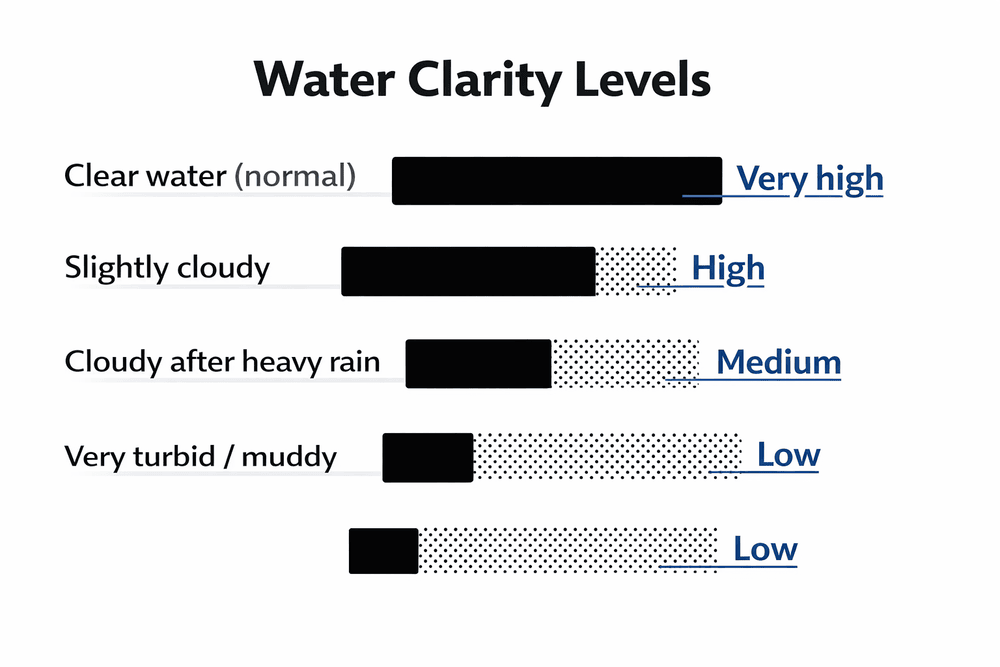
When to Call a Water Filtration Service in Western, NC
If any of these are true, it’s time to bring in a professional water filtration service and not “wait and see”:- Your water turns cloudy or gritty after heavy rain (especially repeatedly)
- You’ve had a coliform scare or want consistent microbial protection
- Flooding occurred near your wellhead
- Filters clog quickly during storm season
- You want a whole-home system sized to your household flow